
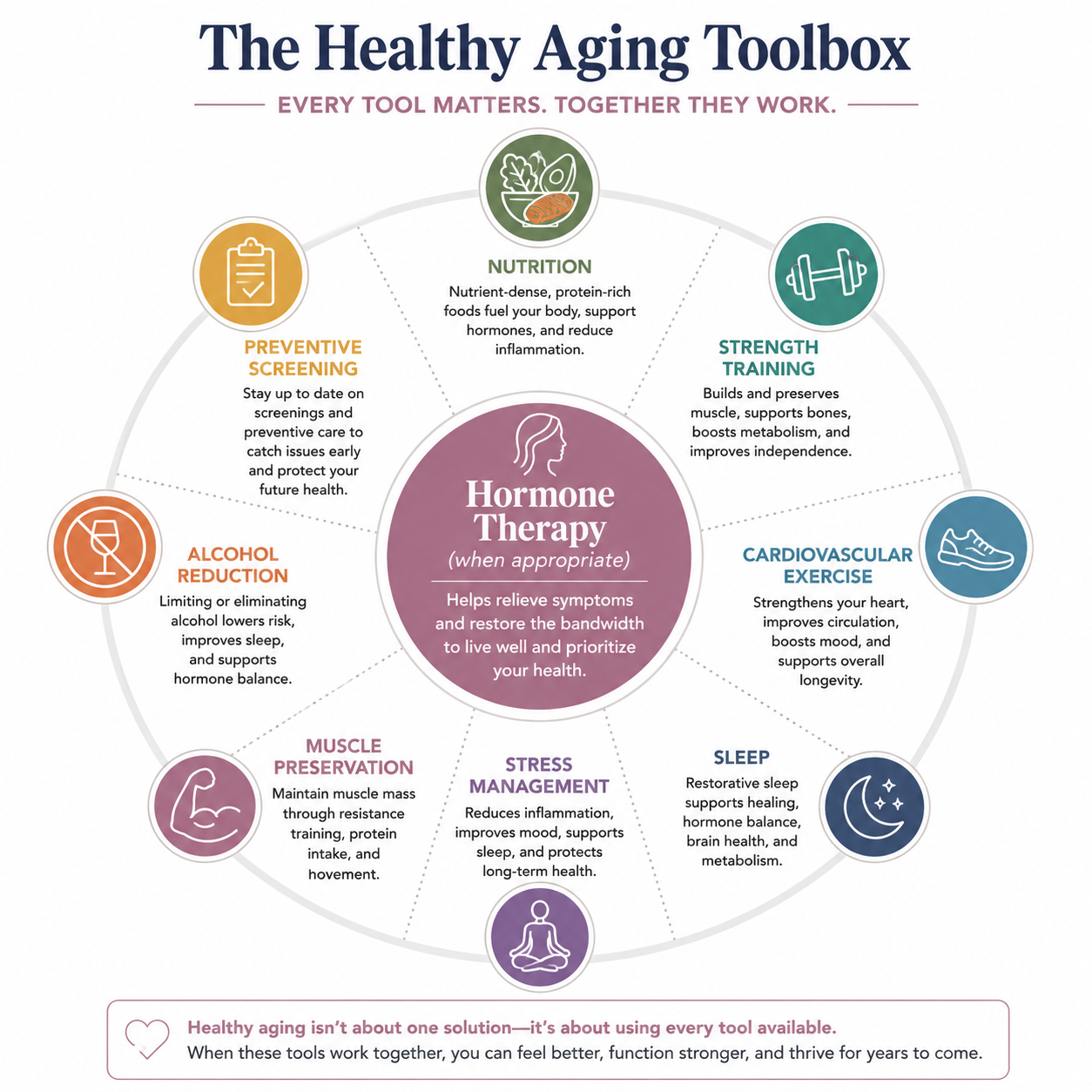
Hormone Therapy Is a Tool—Not the Entire Toolbox
Why Feeling Better Matters
One of the biggest misconceptions about hormone therapy is that it is either a miracle cure or something women should avoid altogether.
The truth lies somewhere in between.
At The Menopause Wellness Center, we believe hormone therapy is one of the most powerful tools available to help the right woman at the right time—but it is only one piece of the picture.
No medication can replace good nutrition.
No prescription can replace muscle.
No hormone can undo the effects of chronic stress, poor sleep, excessive alcohol use, or a sedentary lifestyle.
The healthiest women as they age are rarely relying on one intervention.
Instead, they combine multiple healthy habits that work together to protect their bodies for decades.
Hormone therapy is often what allows them to finally have the energy, motivation, and quality of life to begin doing those things again.
Building Health from the Ground Up
Think of your health as a house.
Hormone therapy may help repair one important support beam, but the foundation is built from everyday choices.
True prevention comes from:
Eating a nutrient-dense, protein-rich diet
Preserving and building muscle through resistance training
Remaining physically active throughout life
Prioritizing restorative sleep
Managing chronic stress
Maintaining a healthy body composition
Avoiding tobacco
Limiting or eliminating alcohol
Staying socially connected
Continuing preventive medical care and screenings
These habits influence nearly every chronic disease that becomes more common after menopause, including cardiovascular disease, osteoporosis, type 2 diabetes, frailty, cognitive decline, and many cancers.
There is no hormone that can replace these fundamentals.
Why Hormones Still Matter
If lifestyle is so important, why do hormones matter?
Because many women simply do not feel well enough to make healthy choices during perimenopause and menopause.
When estrogen and progesterone begin to decline, women often experience:
Severe fatigue
Poor sleep
Joint and muscle pain
Depression or anxiety
Brain fog
Loss of motivation
Reduced exercise tolerance
Weight gain and increased abdominal fat
Hot flashes and night sweats
Vaginal and urinary symptoms that interfere with exercise and intimacy
When you are sleeping only a few hours each night, struggling to think clearly, and feeling exhausted every day, preparing healthy meals or exercising consistently becomes much more difficult.
This is not a lack of willpower.
It is biology.
Hormone Therapy Can Help Restore Your Bandwidth
One of the greatest benefits of appropriate hormone therapy is not simply reducing hot flashes.
It is helping many women regain the physical and mental capacity to care for themselves again.
When symptoms improve, women often find they can:
Sleep through the night
Return to regular exercise
Build muscle more effectively
Recover from workouts
Prepare healthier meals
Improve concentration at work
Manage stress more effectively
Re-engage with family and relationships
Hormone therapy does not create health by itself.
It helps remove barriers that have been preventing healthy behaviors.
In many ways, it restores the bandwidth needed to invest in your long-term health.
Muscle Is Medicine
One of the greatest threats women face after menopause is the gradual loss of muscle.
Beginning in our 30s, women naturally lose muscle mass each decade. This process often accelerates during menopause because of hormonal changes, inactivity, and inadequate protein intake.
Loss of muscle contributes to:
Falls
Fractures
Osteoporosis
Insulin resistance
Weight gain
Loss of independence
Frailty later in life
This is why strength training is one of the most important forms of preventive medicine available.
Hormone therapy may help support muscle maintenance in some women, but it cannot build muscle for you.
The stimulus comes from resistance training.
The building blocks come from adequate protein.
The consistency comes from making it part of your lifestyle.
Nutrition Is More Powerful Than Most People Realize
There is no supplement or medication that can overcome a poor diet.
The food you eat affects inflammation, blood sugar, cholesterol, gut health, body composition, and cardiovascular risk every single day.
We encourage women to focus on:
Adequate daily protein
Fiber-rich whole foods
Fruits and vegetables
Healthy fats
Minimally processed foods
Appropriate carbohydrate intake based on individual needs
Nutrition is not about perfection.
It is about consistently making choices that support long-term health.
Sleep Is Not a Luxury
Sleep is when your body repairs itself.
Poor sleep affects nearly every organ system, increasing the risk of obesity, diabetes, cardiovascular disease, depression, cognitive decline, and impaired immune function.
For many women, improving estrogen levels significantly reduces night sweats and improves sleep quality.
That improvement can create a ripple effect throughout the rest of their health.
Stress Matters More Than We Think
Modern life places tremendous demands on women.
Many spend years caring for children, aging parents, careers, households, and everyone around them while neglecting themselves.
Chronic stress contributes to inflammation, poor sleep, elevated cortisol, weight gain, anxiety, and cardiovascular risk.
Managing stress is not selfish.
It is preventive medicine.
Alcohol and Women’s Health
Many women are surprised to learn that alcohol is associated with an increased risk of several chronic diseases, including breast cancer.
Even moderate alcohol intake may increase risk.
Alcohol also:
Worsens sleep quality
Increases hot flashes
Contributes to abdominal weight gain
Raises blood pressure
Interferes with recovery from exercise
For women seeking optimal health, reducing or eliminating alcohol is one of the most impactful lifestyle changes they can make.
The Menopause Wellness Center Philosophy
At The Menopause Wellness Center, we do not believe in treating symptoms alone.
We believe in treating the whole woman.
Hormone therapy may be an important part of your treatment plan, but it is never the entire plan.
Our goal is to help you build lifelong health by combining evidence-based hormone therapy—when appropriate—with nutrition, exercise, muscle preservation, sleep optimization, stress management, and preventive care. Because healthy aging is never about one prescription. It is about giving your body every tool it needs to thrive.
Hormones are one of those tools.
Not the only tool—but for many women, the tool that finally makes all the others possible.